Iran reject EU's stance on Strait of Hormuz as 'hypocritical'
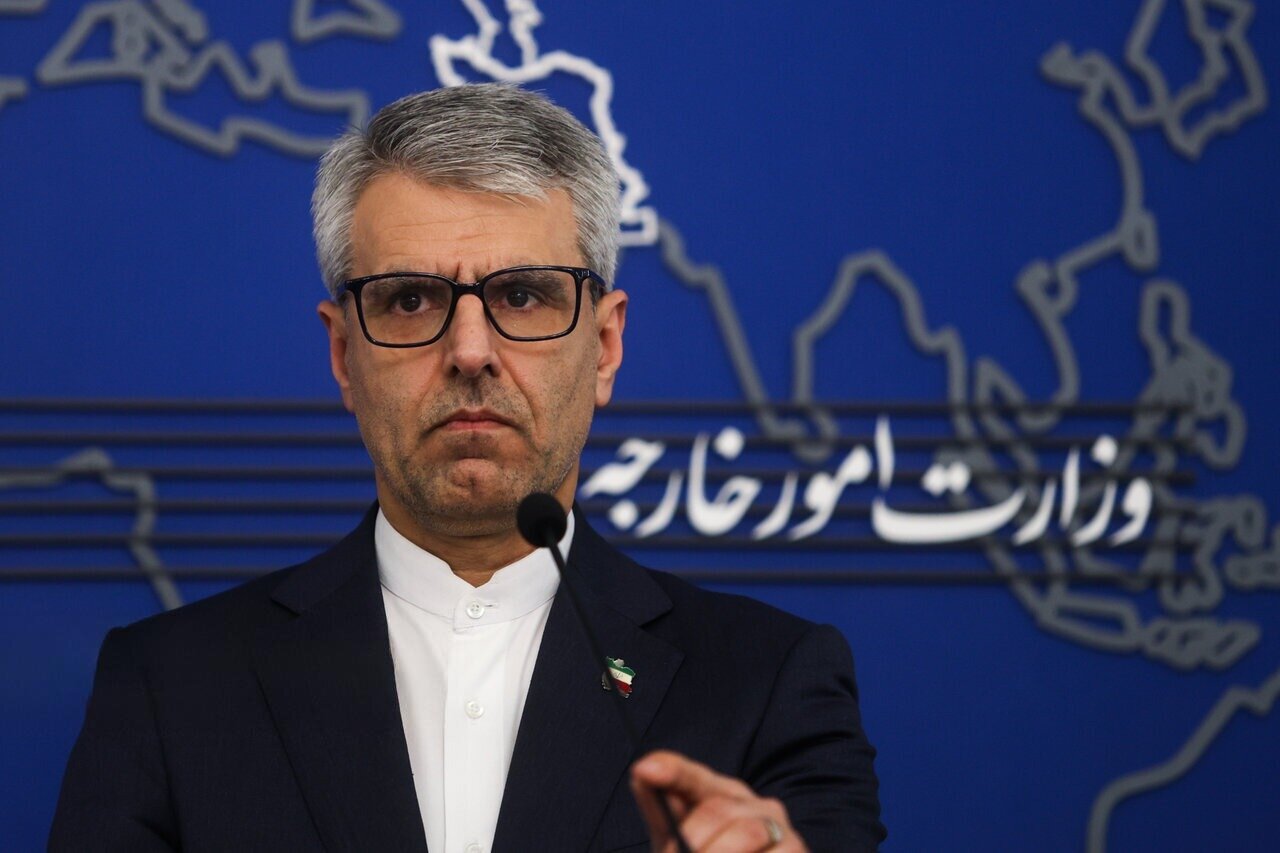
TEHRAN- Iran's Foreign Ministry spokesperson Esmaeil Baqaei has accused the European Union of "chronic hypocrisy" on international law, following remarks by the EU's top diplomat demanding unconditional access through the Strait of Hormuz.
Baqaei's response came after EU High Representative Kaja Kallas posted on X that transit through the Strait must remain open and free of charge under international law. Kallas warned Iran against any "pay-for-passage scheme," calling it a dangerous precedent for global maritime routes, and demanded Tehran abandon any plan to levy transit fees.
Baqaei fired back: "Europe's chronic failure to comply with international law has turned its lectures on 'international law' into a clear manifestation of hypocrisy."
The European official's remarks come at a time when the Strait was open until February 28, 2026 — when a US and Israeli attack on Iran caused its closure. Europe's inaction in response to that aggression has drawn protests from human rights organizations, which accuse the Union of a double standard in its approach to Iran versus the war in Ukraine.
Expanding on Iran's position, Reza Nasri, an international lawyer and foreign policy analyst, outlined four key arguments supporting Tehran's stance.
First, Nasri argues that Western insistence on "unconditional" access to the Strait ignores the central reality of the recent war: the waterway was weaponized to launch an existential armed attack against Iran, making unconditional access legally and morally indefensible.
Second, he notes that Iran's decision to restrict passage to belligerent-linked vessels was not an arbitrary closure but a proportionate exercise of self-defence under Article 51 of the UN Charter.
Third, Nasri points to the dense network of US military bases surrounding the Gulf in Bahrain, Qatar, the UAE, Saudi Arabia, and Kuwait. These installations, he argues, transform the Strait from a neutral international corridor into an extension of a hostile military perimeter. Unless these bases are removed, he contends, the Strait cannot be treated as a standard international waterway.
Finally, Nasri calls for a fundamental shift in how international waterways are conceptualized, arguing that new safeguards must be codified to prevent future misuse of straits as conduits for existential threats.
The standoff over the Strait of Hormuz remains one of the most volatile flashpoints in global maritime security, with roughly one-fifth of the world's oil supplies passing through its waters daily.
Leave a Comment